Preparing the next stretch
One moment…
One moment…
Alto Douro, Portugal
Terraced vineyards, slow rivers, long lunches
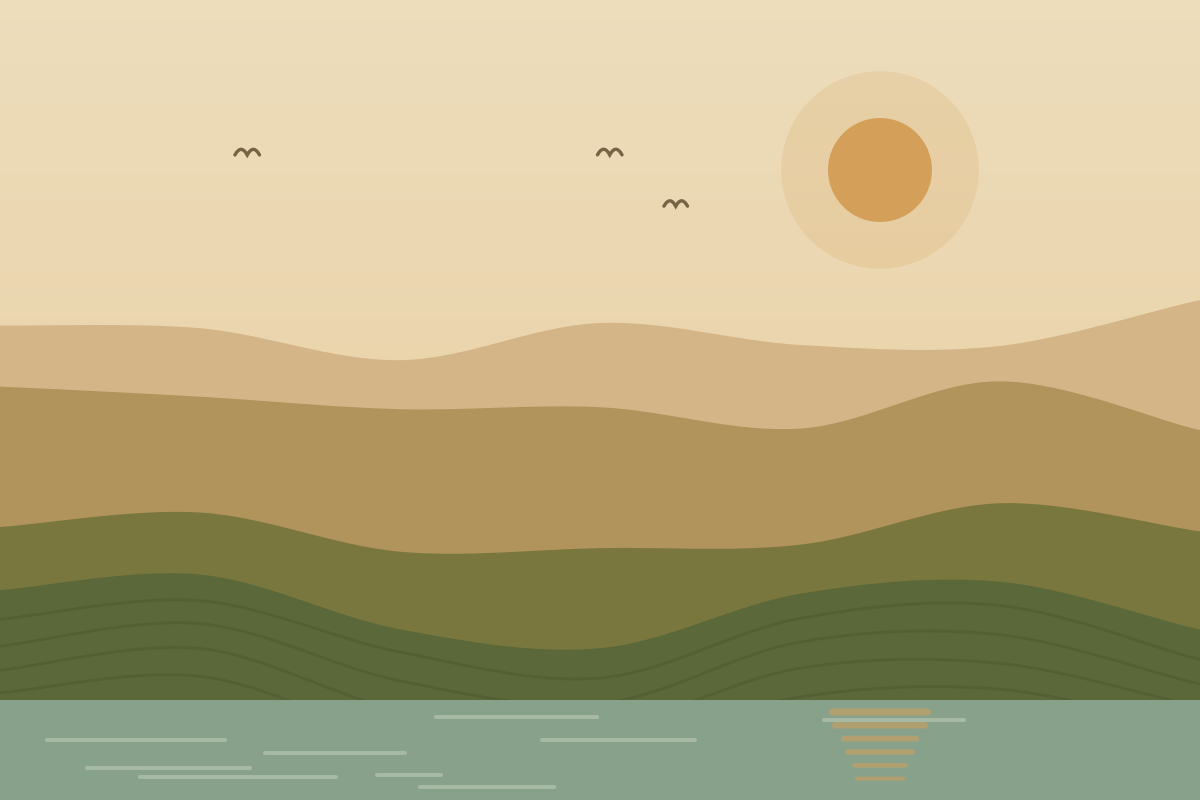
The Douro does not hurry. The river that carved this valley moves at walking pace, and the people who farm its slopes have kept the same rhythm for three hundred years. Vines grow on hand-built stone terraces so steep that most of the harvest still comes down on foot, basket by basket, the way it always has.
We come here for the texture of it: schist underfoot, cork oaks on the ridgelines, the smell of grape must in September. Days are built around villages like Provesende and Favaios, where the bakery still fires its oven with vine cuttings and the winemaker pouring your glass is usually the person whose name is on the label.
This is a landscape best understood slowly — from a walking trail between terraces, from the deck of a wooden rabelo boat, from a long table set under an olive tree. Nothing about the Douro rewards rushing, which is precisely why we keep returning.
Why we come here
Old farmers’ paths link the quintas along the valley’s south bank, threading through vineyards, olive groves, and almond orchards.
Small quintas here are still family-run. Tastings happen at kitchen tables, not visitor centres, and usually run long.
Flat-bottomed rabelo boats once carried barrels downstream to Porto. A handful still sail, and an afternoon aboard one recalibrates your sense of time.
Journeys
Small groups of eight to ten, hosted throughout, and available privately on your dates.
Ask us anything — the right month for your pace, how the walking really feels, what to read before you come. We answer personally.